
 Image 1 of 1
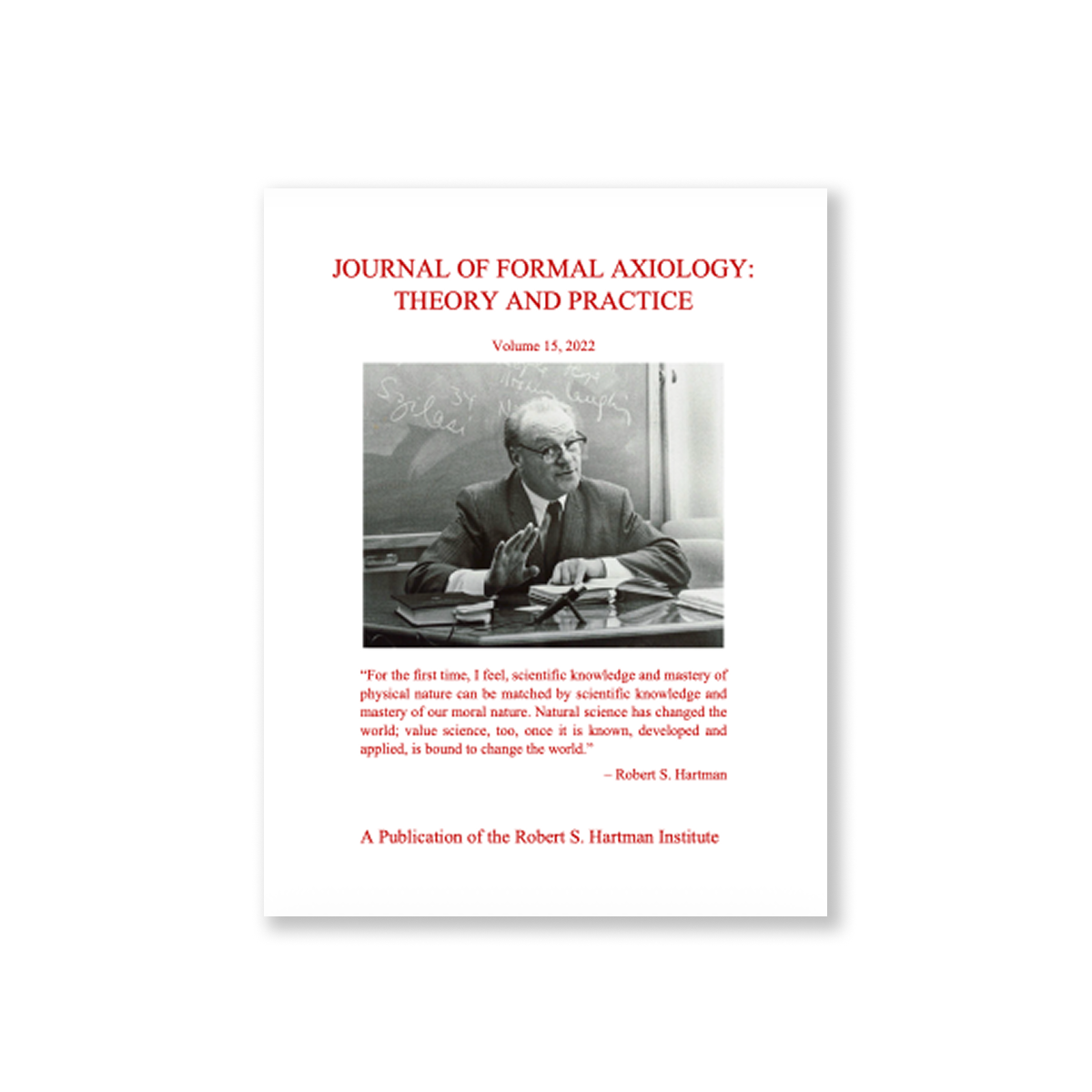
Imagine a one-room house with several doors on each side. There are no windows. You cannot see inside. And the doors are all locked. You don’t have a key. Yet, somehow, you intuit that if you could only get inside, then you would find there some valuable new insight about the theory and practice of formal axiology. Now, imagine that someone walks up to you and hands you a key ring with a hundred keys on it. A dozen doors; a hundred keys. At least one of those keys, for sure, will unlock one of those doors for you. A different key may unlock a different door for someone else.
That’s how the editor sees this issue of the Journal. Formal axiology is difficult to comprehend. Yet, the more insight you gain, the clearer becomes your understanding of it. The authors of articles in this issue have provided us with at least a hundred keys by which we may each further our understanding of this theory and its practice.
Clifford Hurst, The Great Resignation—An Axiological View
Rem B. Edwards, Axiological Values In Natural Scientists And The Natural Sciences
Bob Smith, A More Comprehensive Scoring Of Axiological Profiles
Gilberto Carrasco Hernández, Impact Of The “Orientation Based On Formal Axiology”
Rem B. Edwards, Robert Hartman and Brand Blanshard On Reason, Moral Relativism, And Intrinsic Goodness
Robert S. Hartman, A Moral Science For The Atomic Age
Imagine a one-room house with several doors on each side. There are no windows. You cannot see inside. And the doors are all locked. You don’t have a key. Yet, somehow, you intuit that if you could only get inside, then you would find there some valuable new insight about the theory and practice of formal axiology. Now, imagine that someone walks up to you and hands you a key ring with a hundred keys on it. A dozen doors; a hundred keys. At least one of those keys, for sure, will unlock one of those doors for you. A different key may unlock a different door for someone else.
That’s how the editor sees this issue of the Journal. Formal axiology is difficult to comprehend. Yet, the more insight you gain, the clearer becomes your understanding of it. The authors of articles in this issue have provided us with at least a hundred keys by which we may each further our understanding of this theory and its practice.
Clifford Hurst, The Great Resignation—An Axiological View
Rem B. Edwards, Axiological Values In Natural Scientists And The Natural Sciences
Bob Smith, A More Comprehensive Scoring Of Axiological Profiles
Gilberto Carrasco Hernández, Impact Of The “Orientation Based On Formal Axiology”
Rem B. Edwards, Robert Hartman and Brand Blanshard On Reason, Moral Relativism, And Intrinsic Goodness
Robert S. Hartman, A Moral Science For The Atomic Age